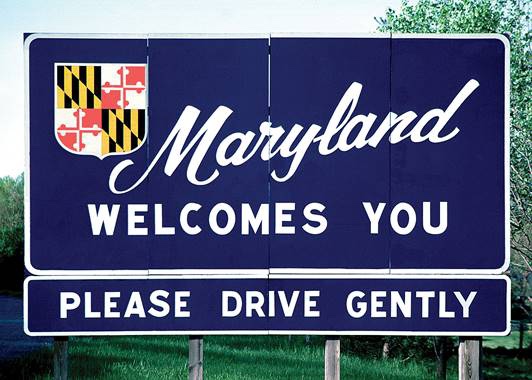
This is an abridged version of the keynote talk I gave to the Maryland International Education Consortium’s Spring Conference on Maryland’s International Education Day. Sorry is a bit longer than usual.
As Minister Counsellor for Industry, Science and Education, I cover a broad range of topics at the Australian Embassy. But the underlying thread that seems to bind them altogether is the future of work.
Report after report has warned about the potential impacts that new technologies will have on the workforce. Machine learning and artificial intelligence, big data analytics, augmented reality, additive manufacturing, quantum, 5G, 6G, the Internet of Things. The world is about to change and with it, so too will the workforce.
Add to this globalisation. The world continues to get smaller (maybe) and markets continue to integrate.
Add to this the fact that we continue to get richer, older, smarter and closer. Which, when combined, has a cumulative effect on what, how and where we produce.
These are the issues the Australian economy has to grapple with, and of course so too does the US.
It’s a complex issue, and one that will ultimately require a holistic response. I’m convinced that sitting at the centre of that response will be education.
Australia
Let me start with a bit of context on Australia.
Australia is about 10 thousand miles in that direction. We’re a country about the size of the US, with the population of Texas.
Economically, we’re doing pretty well – last year we secured our 28th consecutive year of economic growth. The last time we had a recession was 1991.
Much of the why that’s the case has been due to our mining sector. Australia is rich with natural resources that we export all over the world. And sitting next to China while they’ve experienced perhaps the greatest, most rapid period of economic development the world has ever seen has been a huge advantage.
Our third largest export however, is not a commodity. It’s a service. International education earns Australia more in export revenues than gold, copper and alumina combined. At about $32 billion (Australian), we earn more from education exports than we do from all of our agricultural commodities combined.
Our population is a tick over 25 million, but we’re home to about 650 thousand international students. That’s the population of Baltimore
More foreign students come to study in Australia than any other country in the world, except for the USA, which has a population 10x that of Australia’s
As I’ve prepared this talk, I’ve loved going through previous reports and addresses that read much like this. And its amazing how fast statistics like that become dated. Two years ago we were the third most attractive destination. 10 years ago, the fifth. 20 years ago, we barely registered.
There’s good reason for this growth. Australia offers high quality tertiary education (only the US and UK have more universities ranked in the top 100 than we do), with excellence across a broad range of fields. We are English speaking. Provide pathways to citizenship. And for decades now we’ve been actively promoting Australia as a destination for education in key markets across the globe. (We have more counsellors in South America than we do in North America for example.)
Whereas Australia’s mineral wealth stems from – I’m grossly over simplifying the innovation and acumen that’s embedded in our resources sector – geological happenstance, international education was an active pursuit, recognised both for its economic potential, but also as an investment in skills and preparedness.
Opening the doors
I thought it might be useful to jump back a bit and tell the story of how we came to be, and the lessons learned along the way.
Until around the mid-1980s, international education in Australia was by and large part of our foreign aid programme. The Colombo Plan for example, launched in 1950, permitted thousands of Indo-Pacific students to study in Australia on full or part scholarships. By providing training and education, the intent was to promote regional economic development (but not necessarily Australia’s).
In 1984, the Jackson Committee was established to review Australia’s foreign aid programme. That Committee recommended international education be explicitly pursued as “an export industry in which institutions [were] encouraged to compete for students and funds”. This led to a change in Government policy, and by the end of the decade, institutions were permitted to charge international students full tuition fees for the first time.
And they responded.
In 1988, Australia universities housed just 18 thousand international students. Within 10 years we were up to 72 thousand. By 2008, we were at 300 thousand. By 2018, the number of international students studying in Australia had passed 430 thousand. And an additional 200 thousand international students were studying in our VET sector.
They came from China, the sub-continent, Brazil, Malaysia, Korea, Vietnam, and countless other countries.
As you might expect, this had a dramatic effect on individual institutions. 30 years ago, just four percent of enrolments were international students. Today that number sits at almost 30 per cent.
The reforms that opened the doors to international students came, of course, at a time when university funding models were changing as well. As their numbers grew, international students have become an important revenue source of university revenues. In fact, over the last two decades, revenues generated from international students have increased at an average of 11.5 per cent per year.
At a macro level, the significance of education as an export grew year on year. As I mentioned earlier, education is our third largest export. What’s most amazing, is that education’s significance grew at the same time we were experiencing a once in a 100 year mining boom. Beginning in the mid-2000s, the Pilbara in Australia’s northwest, attracted more investment (in real terms) than the Marshall Plan. Resource exports increase by several orders of magnitude. And education was able to keep pace.*
Fire hose
This all sounds very exciting, but let me throw up a warning – rapid growth is both a blessing and a curse. That’s true for an education system as much as it is anything else. It has to be managed.
International enrolments in our vocational education sector grew in 2006, 07, 08 and 09 at rates of 32, 52, 51 and 35 per cent respectively. The number of international students in the system effectively doubled in four short years. That’s a lot for the system to handle.
Now, for the most part, things were OK. But it was clear that the edges were frayed.
Hundreds of colleges were set up across the country, seemingly overnight, to take advantage of the opportunities being presented.
Fraudulent actors purported to offer high quality education, were in reality visa mills that provided a back door to permanent residency. Students were caught in the cross fire, and the reputation of the system was damaged.
It was fair to say that in the rush to growth, quality lapsed and governance regimes were found wanting.
Response
These issues were well recognised by everyone in the sector.
The 2010 Baird Review of international education open with “While recent unparalleled growth in the sector has brought undeniable benefits onshore and abroad, it has also resulted in damaging pressures affecting education quality, regulatory capacity… and infrastructure. These pressures are adversely impacting on international students’ experiences in Australia and Australia’s reputation for international education.”
A suite of measures were introduced to grip up the system. Their guiding objective was to protect student welfare.
· Registration criteria was strengthened for new providers
· Existing providers were required to re-register (leading to the exit of about 20 per cent of VET providers)
· A new approach to risk management was introduced by our national accreditation body
Overseeing system quality are TEQSA in the university space and ASQA in VET. These agencies continue to make sure that the higher and vocational education quality is maintained through the effective regulation of organisations and course material. Their emphasis is on the student experience, and operate with a risk-reflective approach to regulation.
I want to pause for a moment and hover over this idea of “quality.” When you’re dealing with number of this order, or even magnitudes less, its tempting to fall into a treating education as a commodity. But of course there’s something quite a bit different here. We’re talking about people; a human and cultural exchange.
Yes, as you might expect, TEQSA is responsible for ensuring that what someone says is a degree is actually a degree. But on their plate right now, is also a review of sexual assault on campus, cultural inclusion and isolation, and freedom of speech.
You have to do it right, and pay attention to student welfare. Ultimately, it will be these students that will be the best (or worst) advocates for the next wave of undergrad recruits.
Success and diversification
At over $30 billion , international education forms a significant part of the Australian economy. Moreover, it forms a significant part of local communities and of the finances of local universities and colleges. Some estimates suggest that international education supports almost 250 thousand jobs across the country — which is more than are employed in our mines and almost as many as employed on our farms.
We’ve learnt however, that this means we’re exposed and susceptible to exchange rate shocks, competition, geo-politics and other adverse shocks. Some institutions more so than others.
Today I wonder if there is an issue more top of mind amongst university administrators than the need to diversify their student base
Preparing a global workforce
I began this talk by with a reference to the future of work.
Depending on which study you read, estimates of the workforce that’s vulnerable to automation can exceed 40 per cent. It’s a jobless doomsday scenario that promises to hit white collar workers as much as it does blue collar.
That’s a lot of hype, and to be honest I’m not buying it.
We’ve been talking about the robopocalypse for years now, but it hasn’t yet materialised. Or even hinted at materialising. Quite the opposite in fact. In the last 10 years, more than 38 million jobs have been created across the OECD. It reminds me of similar claims about the teleworking and offshoring revolution.
There’s a great paper by James Bessen at the University of Boston, who looks at the big statistical manual on occupations from the 1950 Census. And he asks with all the technological change we’ve experienced over that period — arguably more than we’re currently/about to experience —how many occupations have been made totally obsolete due to technology? The answer is only 1. 1 out of 271. Elevator Operator.
The number of occupations that have changed due to technology however, is all the rest of them
Buried in that finding is a really important message about the skill needs of the future. Technology is not a substitution story, but a complementary one. That I think, offers a rosier outlook for the future, but it also puts a lot of pressure on the system to adapt and position graduates ready for a workforce that will be different from the one we have now, and will continue to change over the years to come.
A few years back, we did a study on how “automatable” the Australian workforce was, and how this was changing over time. Perhaps somewhat counter intuitively, we actually found that the share of jobs that were at-risk was actually falling over time.
This in part reflects the fact that the new jobs being created aren’t those that can be replaced by a robot or an algorithm (any time soon at least). The jobs being created are the ones that are embodied with creative, social and critical thinking skill sets.
The challenge, will be to prepare the workforce for a world in which “To participate effectively” —this is from Brooking — “in the increasingly complex societies and globalized economy that characterize today’s world, students need to think critically, communicate effectively, collaborate with diverse peers, solve complex problems, adopt a global mindset, and engage with information and communications technologies”.
I have to admit that this push to internationalise US colleges and universities is a bit foreign to me. I’ve grown up in the system just described. International students and faculty have always been the norm. And being a small, young country, located in Asia, but made predominantly up of Western Europeans, we always seem to be reflecting on what is our place is in the world.
With regards to workforce skill needs, I think our system has been quite deliberate about preparing students for an increasingly global market place.
The Government launched a scholarship program in 2014 for example, called the New Colombo Plan. It was very similar to the old Colombo Plan, except that its added an emphasis on outbound students. The aim was to provide a new generation of Australians with practical experience while living and studying in the Indo-Pacific region.
Open to all undergraduate students, NCP supports around 10,000 students to study and intern across the Pacific Islands, South Asia, Mongolia, Japan, Indonesia, Singapore and so on. By the end of next year close to 40 thousand students will have participated.
But that’s a bit different to what I’m talking about here, and I don’t know if our system has been as conscious about preparing students for an increasingly digital marketplace. Historically at least.
Fortunately, there are a lot of complementarities between the two. The skills brought by internationalisation are synonymous with those needed to survive in the future of work.
The Institute of International Education for example compiled a list of the 15 most desired competencies by 21st Century employers. In addition to the traits I’ve already mentioned, their list included:
• Confidence
• Curiosity
• Intercultural skills
• Interpersonal skills
• Language skills
• Resilience
They then surveyed nearly 5000 study abroad alumni, and found that as result of their global experience, their skills significantly improved in all but four of those competencies.
Wrap up
I’ve spoken on the transformative impact growth in this sector has had at every level of the economy. Its resulted in jobs, incomes, tax revenues, new programs and opportunities. I didn’t even get to touch on how this has been shown to lift teaching quality. Nor on cross-subsidy issues.
And I’ve spoken on the competencies that internationalisation can build.
Now I’ll combine the two. We’ve had 2.5 million students study in Australia over the last 50 years.
That’s 2.5 million students have come to Australia to obtain an education, and in the process, by participating in a study abroad programme, have seen a lift in precisely the core competencies that will be needed for the new workforce.
They’ve since become business leaders, government officials and entrepreneurs. They’re out there — a 2.5 million strong diaspora — spread across the globe, and they understand our institutions, values and perspectives. They know immediately how to locate Adelaide on a map, and how to properly pronounce Melbourne. They know that yesterday was Anzac Day and the significance of that day.
That’s 2.5 million skilled Ambassadors spread across the world, a large number in leadership positions, with a positive disposition towards Australia.
Maryland, which has about 20 thousand international students, has about the same population as Victoria, which is home to about 170 thousand students. That’s quite a disparity. I congratulate you on your collective efforts, and hope to see the state increase its presence in the global market place.
 TALES FROM THE LONG TAIL
Leave a comment