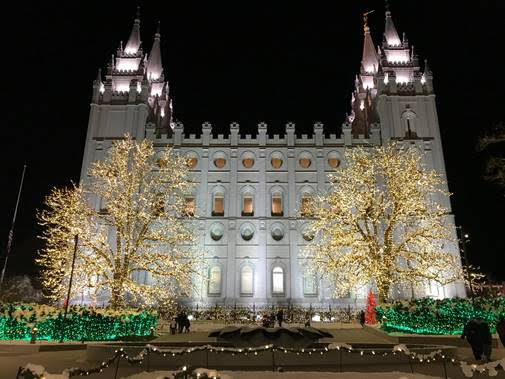
Utah, just another flyover state between San Francisco and New York.
Most of the land-locked state’s populated live in the greater Salt Lake City region. Outside of SLC, the state is sparsely populated, boasting amazing parks for winter sports and mountain biking, and some very rich mining deposits. (Rio Tinto operates the world’s second largest open-pit copper mine a half hour drive from the city.)
It feels remote. The closest metropolitan areas are Denver (800 kms to the East), and Las Vegas (700 kms) and Phoenix (1100 kms) to the South West. We mightn’t expect the SLC economy to be materially different from say Kansas City.
But Utah much more than your average flyover. SLC is a thriving oasis of technology, software development and innovation. Rising from the ashes of WordPerfect and Novell, Utah sits atop everyone’s lists of places to watch.
- Ranked number 1 by Entrepreneur as the top start-up destination outside of San Francisco or New York.
- Number 1 on the Forbes list of Best States for Businesses and Careers (in fact three Utah cities SLC, Provo (which is SLC South) and Ogden (which is SLC North) made Forbes’ list of top 10 Best Places for Businesses and Careers)
- Number 1 on CNBC’s list of Top States for Business
- Number 1 on the ALEC Rich States Poor States report for best economic outlook
- Number 1 for high tech job growth and state R&D investment
- Number 3 for long term job growth and number 4 for STEM job growth
The state is home to 4000 tech startups and four unicorns — Pluralsight, Domo, Qualtrics (which just sold to SAP for $8 billion!) and InsideSales. Big tech is paying attention — Adobe and eBay have “massive” development and engineering operations in SLC. As is finance, Goldman Sachs’ biggest operation outside of NY is SLC.
Typically when you think innovation, you think coastal. The talent and infrastructure you need to be a global city, are generally synonymous with the talent and infrastructure you need to be an innovative city. In this light, SLC shouldn’t exist.
SLC has a workforce of about 1.6 million, most of which are young (the lowest median age in the country) and well educated. Nearly two thirds of the state’s population are Mormon (some counties in excess of 80 per cent), they come armed with global experience, language skills and a nous for marketing and sales. As the “Vatican of the LDS Church” SLC also has pulling power that sees the return of capital, talent and entrepreneurs. And those that make it, “don’t pull the ladder up and walk away.” A powerful player in the city itself, the LDS church can make strategic investments that improve liveability.
Part of the city’s success came from decisions made 30+ years ago to invest in a technology based cluster strategy. Centres of excellence were developed around the state’s universities as part of a long run vision that is paying dividends today. The University of Utah, Utah State University and the LDS owned Brigham Young University excel in life sciences, computer graphics, aerospace, simulation and telecommunications, and feed into local industry.
The state government boasts about its hands off/get out of the way approach: “every sector is seeing jobs growth, except one, the public sector”. But the jewel in the local innovation crown has to be USTAR. USTAR is Utah’s lead technology based economic development program working to transform “ideas and research into disruptive products and services that promote the continued growth and diversification”. The program provides technology entrepreneur services, competitive grant funding (to the tune of $20 million a year), mentoring, and incubation facilities. USTAR’s programs are designed to increasingly diversify the state’s economy while helping create high quality jobs and new companies.
Rooting for Utah is Silicon Slopes, a grass roots organisation that’s part advisory service and part advocate. Silicon Slopes has humble beginnings as a blog (I’m listening) on Utah’s exciting tech scene. They’ve become an industry-led champion for the region, with a developed brand that describes the region. In addition to a magazine and a podcast, they run over 100 events a year — including the annual Tech Summit that’ll attract 20,000 people.
It’s worth noting that SLC did not make Amazon’s top 20 list for HQ2. Officially, it was because the population was too small and not in the right time zone. One might think that Utah’s unique brand of conservatism (Utah reintroduced the firing squad as a means of capital punishment in 2015) might also have clashed with the Amazon’s Seattle vibe. On the ground, the response was a resounding “hallelujah”. The tech community saw Amazon more as a threat to the ecosystem they’ve built than an opportunity to expand.
 TALES FROM THE LONG TAIL
Leave a comment